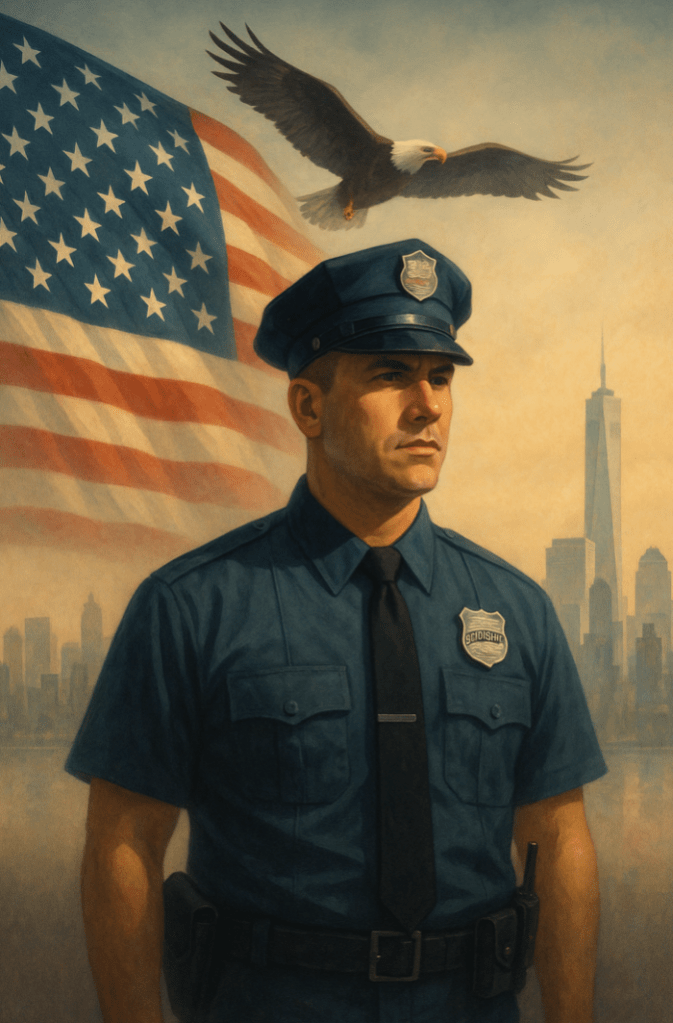
The manned guarding sector in the United States traces its origins to the mid-19th century, a period defined by rapid industrialisation, territorial expansion, and the absence of a unified public security framework capable of protecting a nation growing at unprecedented speed. Long before the emergence of formalised police structures and federal agencies, the safeguarding of assets, infrastructure, and individuals fell largely to private initiatives. These early conditions shaped the foundations of what is now the world’s largest and most sophisticated private security market.
1. A Nation in Transformation: Industrialisation and Territorial Expansion
By the 1850s, the United States was undergoing profound economic and geographic transformation:
- The Industrial Revolution had accelerated the growth of factories, railroads, warehouses, and financial institutions.
- Large urban centres such as New York, Chicago, and Philadelphia were booming, but vast regions of the country remained lightly governed or entirely unpoliced.
- The westward expansion — driven by migration, mining, and railroad construction — created new hubs of economic activity in remote territories where public law enforcement was rudimentary or non-existent.
This unique combination produced a structural gap between the security demanded by the economy and the capacity of government institutions to provide it.
2. Limited Public Policing and the Rise of Private Solutions
During this period, policing in the United States was:
- Local, often restricted to city boundaries;
- Fragmented, with significant variation between municipalities and states;
- Under-resourced, lacking the personnel, funding, and mandate to protect private industrial assets;
- Unsuitable for large-scale commercial needs, which included protecting railroads, ports, mines, factories, and financial shipments.
As a result, companies and wealthy individuals turned to private protection services. These early actors provided patrols, guarding, investigations, and the protection of cash and goods in transit — all functions that the public sector could not yet guarantee across a vast and expanding nation.
3. The Emergence of Private Security Pioneers
The mid-19th century witnessed the rise of several influential private security organisations that shaped the DNA of modern manned guarding in the United States. The most notable among them was the Pinkerton National Detective Agency, founded in 1850 by Allan Pinkerton.
Pinkerton became emblematic of early private security for several reasons:
- It provided industrial guarding for railways and logistics operations.
- It offered private investigative services, filling gaps left by law enforcement agencies.
- It delivered risk intelligence, surveillance, and protection services long before such functions were professionalised in the public sector.
- It expanded nationally, creating one of the first coordinated security networks spanning multiple states.
Pinkerton’s motto — “We never sleep” — became synonymous with private protection in a country where much of the territory still lacked organised policing.
4. The Industrial Age and the Institutionalisation of Guarding
By the late 19th and early 20th centuries, industrialisation intensified corporate demand for reliable guarding:
- Steel mills, oil refineries, and manufacturing giants required full-time protection.
- Railroads, ports, and financial institutions needed secure supply chains and asset protection.
- Labour tensions and corporate espionage increased the need for trained security agents.
Private security companies began to develop structured approaches to:
- perimeter guarding,
- access control,
- patrols,
- crisis response,
- and the protection of executives and strategic assets.
These developments marked the beginning of guarding as a stable, professionalised sector.
5. Regulatory Milestones and the Professionalisation of the Industry
Throughout the 20th century, several milestones pushed the U.S. manned guarding sector towards modern regulation and professionalism:
- Expansion of state-level licensing laws, defining training, background checks, and operational standards for security officers.
- Growth of federal agencies (FBI, DHS, TSA), which reshaped private–public cooperation.
- Increased compliance requirements for critical infrastructure, including energy, transportation, defence, and banking.
- Post-9/11 reforms, which introduced new expectations for risk management, access control, intelligence-driven security, and private support to national security operations.
Today, the U.S. guarding market is governed by a complex but robust framework combining state regulations, federal guidelines, and industry standards such as those defined by ASIS International.
6. The Modern U.S. Manned Guarding Sector
In the 21st century, the United States hosts the largest and most diversified private security industry in the world. Manned guarding plays a central role across sectors such as:
- corporate real estate,
- critical infrastructure,
- aviation and transportation,
- technology and data centres,
- retail,
- healthcare,
- education,
- and public–private partnerships.
Key characteristics of today’s market include:
- Exceptional scale, with hundreds of thousands of licensed security officers.
- Integration of technology, including smart surveillance, access control, and risk analytics.
- Increasing specialisation, with roles ranging from traditional guarding to executive protection, command-centre operations, and emergency response.
- High regulatory diversity, requiring corporations to navigate a complex multi-state compliance environment.
7. A Sector Originating from Necessity and Evolving into Strategy
The origins of manned guarding in the United States contrast sharply with those of many European countries, where public policing was established earlier and more uniformly. In the U.S., private security filled a vacuum — not as a complementary service but as a foundational component of national economic development.
What began as a necessity during the industrial and frontier eras has evolved into a strategic, technology-enabled, and highly professionalised industry. Today, manned guarding remains essential for ensuring safety, continuity, and resilience across the country’s most important economic and social systems.
 Artald Peran - Corporate Security
Deja un comentario